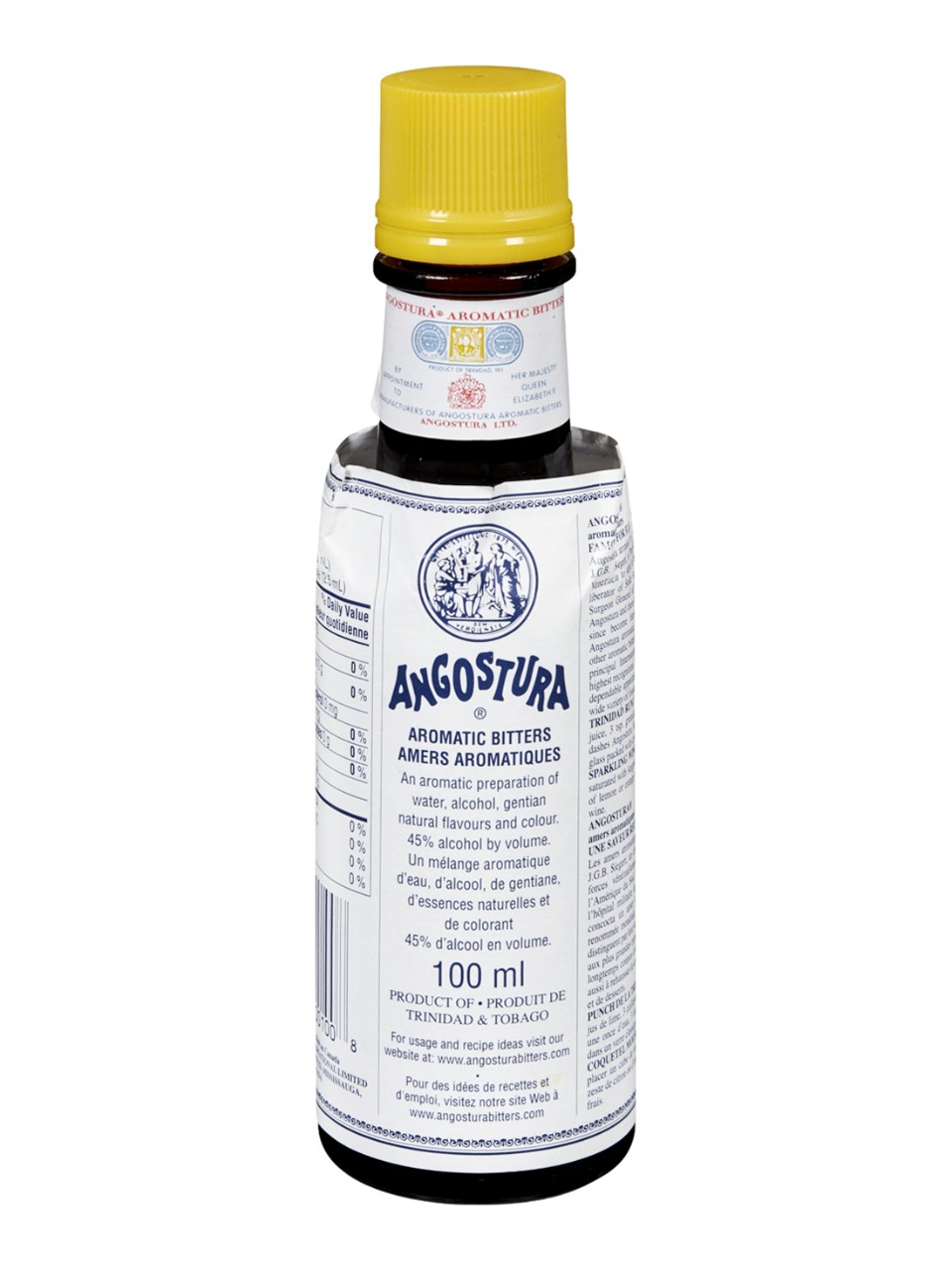
Bitters
A concentrated, intensely flavored blend of botanicals, spices, and alcohol, used in small dashes to add depth and balance to cocktails. Angostura, the industry-standard brand since 1824, bottles its aromatic bitters at 44.7% alcohol in a distinctive 100 mL bottle from Trinidad and Tobago.
Origin
Angostura, Venezuela, where the original 1824 Amargo Aromático was created; the modern bottle has been produced in Trinidad and Tobago since the 1870s.
History
Bitters were created in 1824 by Dr. Johann Gottlieb Benjamin Siegert as a medicinal tonic, and quickly found a second life as a cocktail ingredient: the original 19th-century definition of a "cocktail" was simply spirit, sugar, water, and bitters. The category nearly vanished in the mid-20th century as classic cocktails fell out of fashion, then came roaring back during the craft cocktail revival, which has produced dozens of specialty bitters beyond the original aromatic style.
Flavor profile
Concentrated and intensely aromatic, blending warm baking spice (clove, cinnamon) with bitter gentian root and dried fruit; used in dashes rather than measured like a spirit.
Tasting notes
Tasted on their own, a few drops are overwhelmingly clove, cinnamon, and bitter gentian root, but in a finished cocktail they add a background savory-spice complexity that ties sweet and sour elements together rather than reading as their own distinct flavor. Different bitters lean into different accents: orange bitters skew citrus-forward, while Peychaud's is lighter and more anise-tinged.
Substitutes
- Orange bitters, for a brighter, more citrus-forward accent in place of aromatic bitters.
- Peychaud's bitters, for a lighter, more floral, anise-tinged alternative, classic in a Sazerac.
- A tiny pinch of ground cinnamon and clove stirred in, only as a genuine last resort, since it's a rough approximation rather than a real substitute.