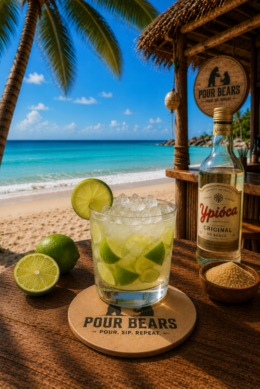

Lime
Fresh lime, juiced for acidity or used as a wedge garnish.
Origin
Southeast Asia, spreading through the Middle East and Mediterranean by the medieval period, later carried to the Caribbean and Americas by European colonizers, where it became especially closely tied to rum culture.
History
Limes trace to Southeast Asia and spread west along the same historic trade routes as lemons, though they later became especially associated with the Caribbean, where Spanish and other colonizers planted them widely and British ships famously carried lime juice to prevent scurvy (giving rise to the nickname "limey" for British sailors). Lime became inseparable from rum-based drinks in particular, from the Daiquiri to the Mojito to Tiki cocktails broadly, its brighter, slightly more bitter tartness than lemon suiting rum's sweetness especially well.
Flavor profile
Sharp and tart, with a slightly more bitter, tropical edge than lemon's cleaner sourness.
Tasting notes
Fresh lime juice brings a bright, slightly bitter tartness that pairs naturally with rum and tequila, and its peel's oils, expressed or zested, add an aromatic lift distinct from lemon's brighter, more straightforward citrus scent.
Substitutes
- Lemon juice, for a related but distinctly different, less bitter tartness.
- Key lime, for a smaller, more aromatic, slightly different variation on standard Persian lime.
- Bottled lime juice, in a pinch, understanding it lacks fresh juice's brightness.