Campari
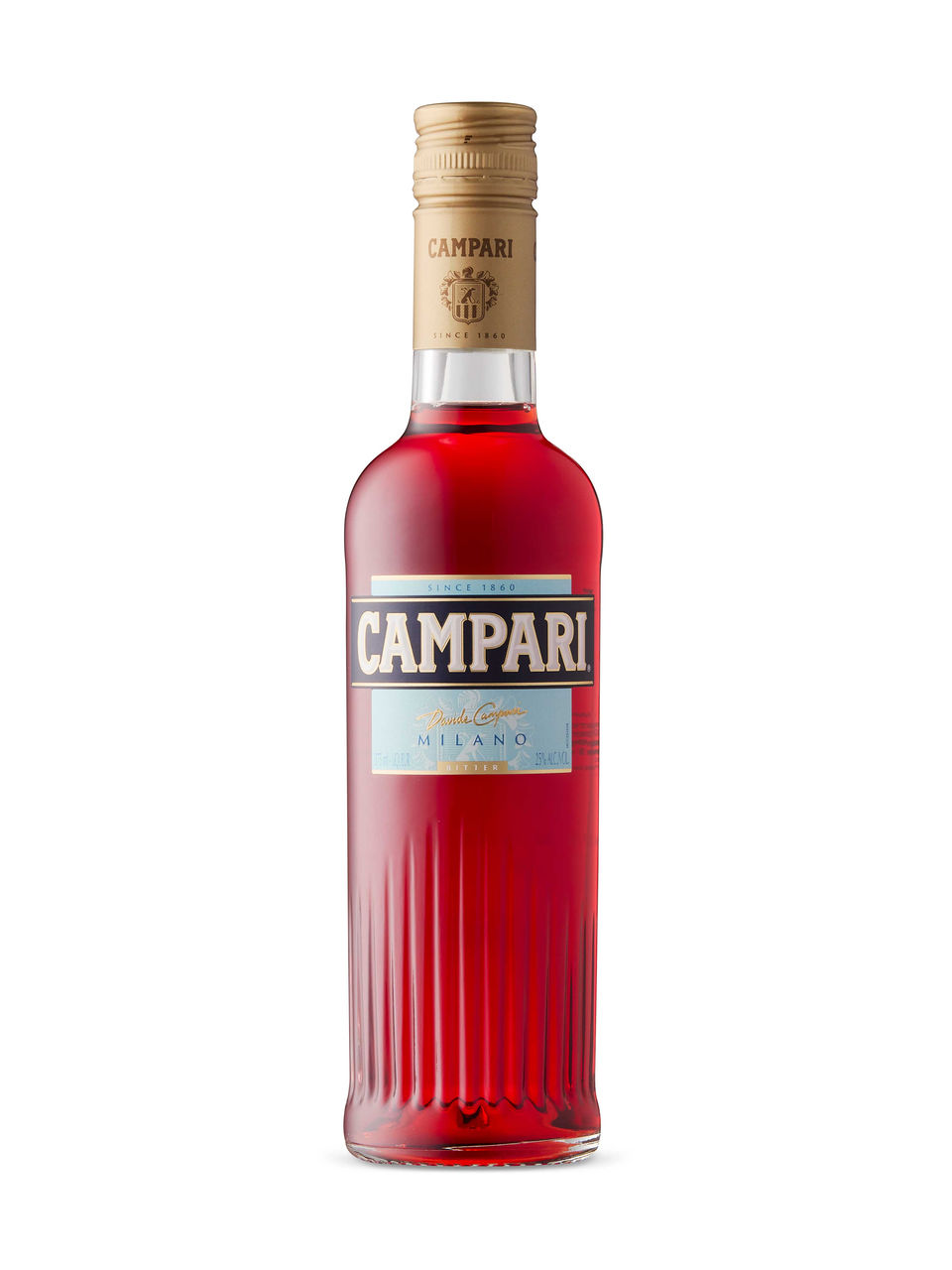
A bright red Italian bitter liqueur (aperitivo) with a bittersweet, herbal flavor - essential to the Negroni. Made in Piedmont, Italy since 1860, it's bottled at 25% alcohol, most commonly in a 375 mL bottle.
Origin
Novara, Italy, formulated by Gaspare Campari around 1860 and later headquartered in Milan.
History
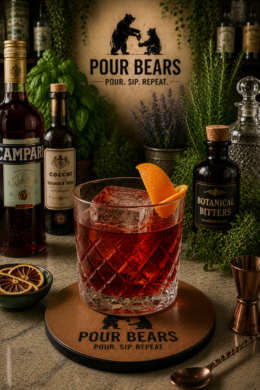
Gaspare Campari began tweaking his bitters recipe in the 1840s and settled on the final formula around 1860, a closely guarded blend still said to include more than 60 herbs, spices, barks, and fruit peels. He opened a cafe in Milan in 1862 near the city's cathedral, and a second location within the newly built Galleria in 1867, helping popularize the Milanese custom of the aperitivo, a light, bittersweet pre-dinner drink meant to stimulate the appetite rather than fill the stomach. Campari became the defining ingredient in two of the 20th century's most enduring cocktails, the Americano and the Negroni (created in Florence in 1919).
Flavor profile
Intensely bitter and herbal, with bright orange peel and a deep red color that historically came from a natural insect-derived dye (cochineal), since discontinued in favor of artificial coloring.
Tasting notes
Sharp, assertive bitterness dominates, backed by bright orange peel and a complex herbal depth that unfolds slowly - far more bitter and intense than Aperol, making it a defining, rather than background, flavor in anything it's mixed into.
Substitutes
- Aperol, in a larger amount, for a much lighter, less bitter substitute that will shift a drink's balance noticeably.
- Cynar, for a different but comparably bitter, complex Italian aperitivo.
- A different bitter red aperitivo (Gran Classico, Cappelletti), for a close substitute in most classic recipes.