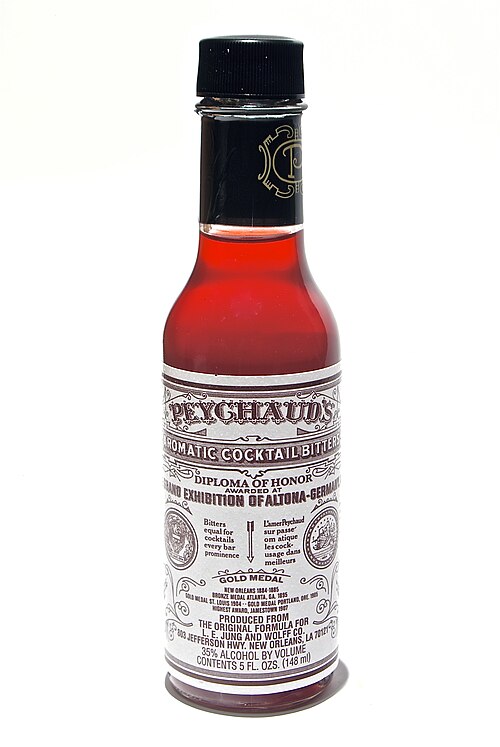
Peychaud's Bitters
A New Orleans-style bitters with a lighter, more floral, anise-tinged flavor than Angostura - essential to the Sazerac.
Origin
New Orleans, Louisiana, created between 1849 and 1857 by Antoine Amedee Peychaud, a Creole apothecary originally from Saint-Domingue (present-day Haiti).
History
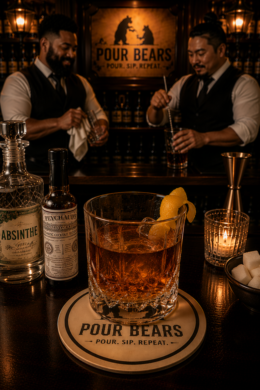
Antoine Peychaud, an apothecary who ran a French Quarter pharmacy starting in the 1830s, developed his gentian-based aromatic bitters sometime in the 1840s or 1850s, advertised by 1857 as being used at the Sazerac House. Legend holds that Peychaud and his friends were among the first to add his bitters to Sazerac de Forge et Fils brandy (later swapped for rye whiskey), giving rise to what's often called America's first cocktail, the Sazerac. Peychaud's remains inseparable from that drink and from New Orleans cocktail culture generally, currently produced by the Sazerac Company at the Buffalo Trace Distillery in Kentucky.
Flavor profile
Gentian-based bitterness with a distinctive anise and mint aroma, lighter and more floral than standard aromatic bitters.
Tasting notes
A brighter, more anise-and-mint-forward profile than Angostura-style aromatic bitters, less heavy on clove and cinnamon, giving the Sazerac and other New Orleans classics their distinctive lighter, more floral bitterness.
Substitutes
- A different New Orleans-style bitters brand, if one is available, for the closest match.
- Aromatic (Angostura-style) bitters plus a tiny drop of anise liqueur, as an approximation.
- Orange bitters, for a different but still bright, aromatic dash in a pinch.