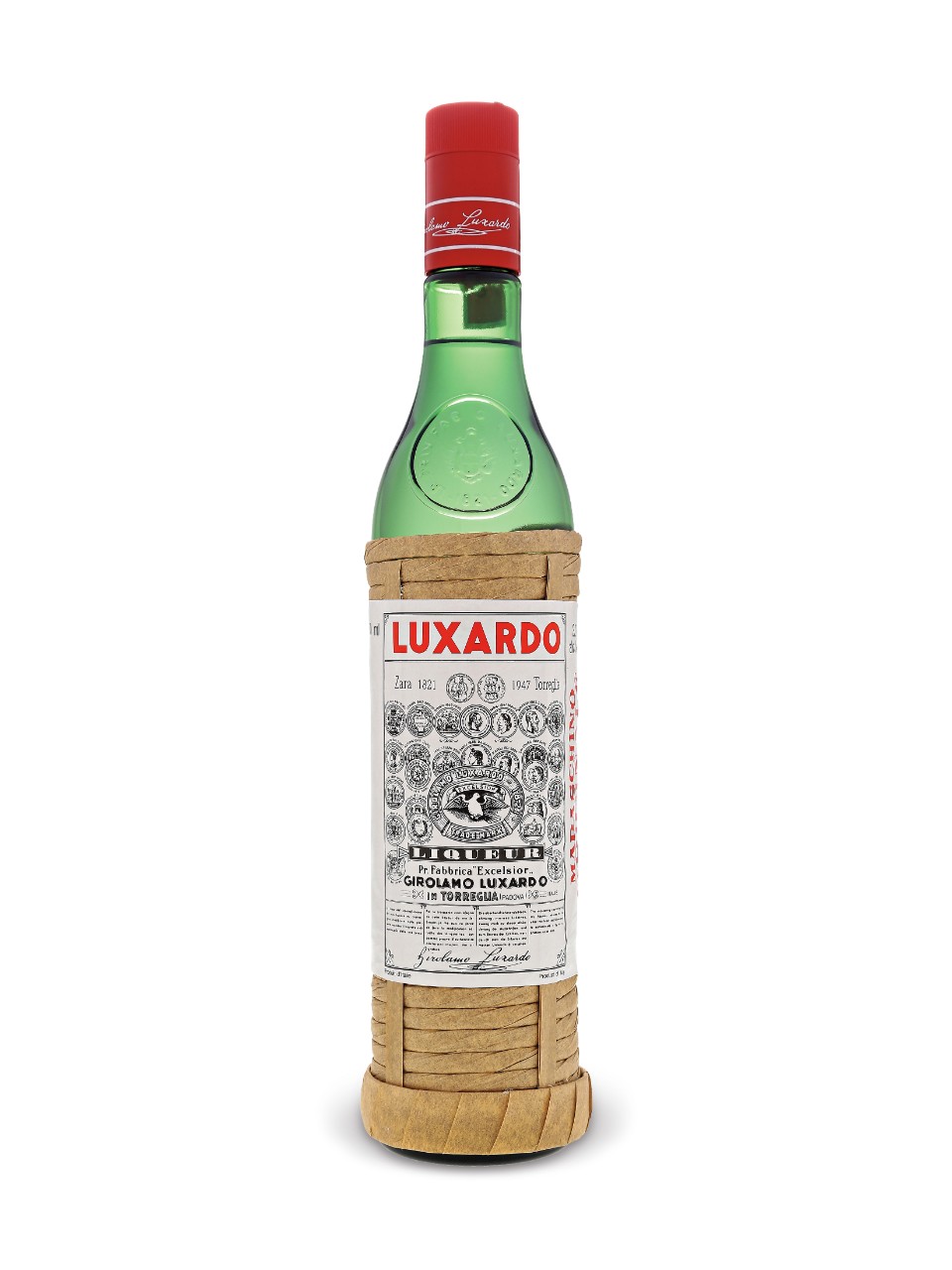
Maraschino Liqueur
A dry, slightly almond-like liqueur distilled from Marasca cherries and their pits - not to be confused with sweet maraschino cherries. Luxardo, the Italian producer that all but defines the category, bottles its version at 32% alcohol in a 750 mL bottle.
Origin
Zadar (historically Zara), on the Dalmatian coast of present-day Croatia, invented by an 18th-century pharmacist monk and refined commercially by Girolamo Luxardo starting in 1821.
History
Maraschino liqueur is credited to an 18th-century pharmacist monk working in Zara (now Zadar, Croatia), and the city became known internationally as the home of maraschino production, with several distilleries operating there by the 17th century. Girolamo Luxardo founded his distillery in Zara in 1821, refining a homemade recipe from his wife into the maraschino still made today, built on the small, dark Marasca sour cherry, including its pits and stems, for a distinctive bitter-almond edge alongside the cherry itself. It earned imperial recognition from the Austrian Emperor and had reached bars as far as New Orleans by 1839, becoming an essential ingredient in classic cocktails like the Aviation and the Last Word.
Flavor profile
Dry and complex, with cherry, bitter almond, and a distinct funky, slightly medicinal edge quite different from sweet cherry liqueurs.
Tasting notes
Unlike a sweet cherry brandy, maraschino is dry and almost savory, tasting of cherry pit and marzipan more than sweet cherry flesh, adding a distinctive, slightly funky complexity to cocktails like the Aviation and Last Word rather than straightforward fruit sweetness.
Substitutes
- A different maraschino liqueur brand (Luxardo remains the benchmark most others are measured against).
- Kirsch (cherry eau-de-vie) with a small amount of added sugar, as a rough, drier approximation.
- Amaretto in a very small amount, for a related but much sweeter almond note, understanding the cherry character will be missing.