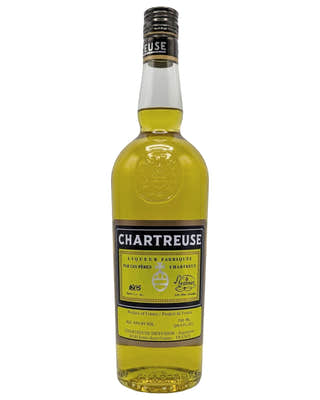
Yellow Chartreuse
A milder, sweeter, lower-proof version of Chartreuse, colored yellow with a honeyed herbal flavor.
Origin
The Grande Chartreuse monastery near Grenoble, France, developed by Carthusian monks as a milder, sweeter companion to their older Green Chartreuse.
History
Following the enormous complexity of Green Chartreuse's centuries-old herbal recipe (dating to a 1605 manuscript given to the Carthusian monks), the monks introduced Yellow Chartreuse in 1838 as a lower-proof, honey-sweetened, and notably milder variation built from a similar but distinct blend of over 130 herbs and botanicals. It became a valued if slightly overshadowed sibling to its green counterpart, offering bartenders a way to add Chartreuse's herbal complexity to a cocktail without the green version's much higher proof and more assertive bitterness.
Flavor profile
Sweet, honeyed, and floral, with gentle herbal complexity and far less intensity than Green Chartreuse.
Tasting notes
A softer, honey-sweet herbal liqueur, considerably milder and more approachable than green Chartreuse, working well in cocktails wanting subtle botanical complexity without an overpowering bitter or high-proof kick.
Substitutes
- Green Chartreuse, used more sparingly given its much higher proof and intensity.
- Bénédictine, for a different but comparably sweet, herbal French liqueur substitute.
- A honey-based herbal liqueur, for a general approximation of the style.