
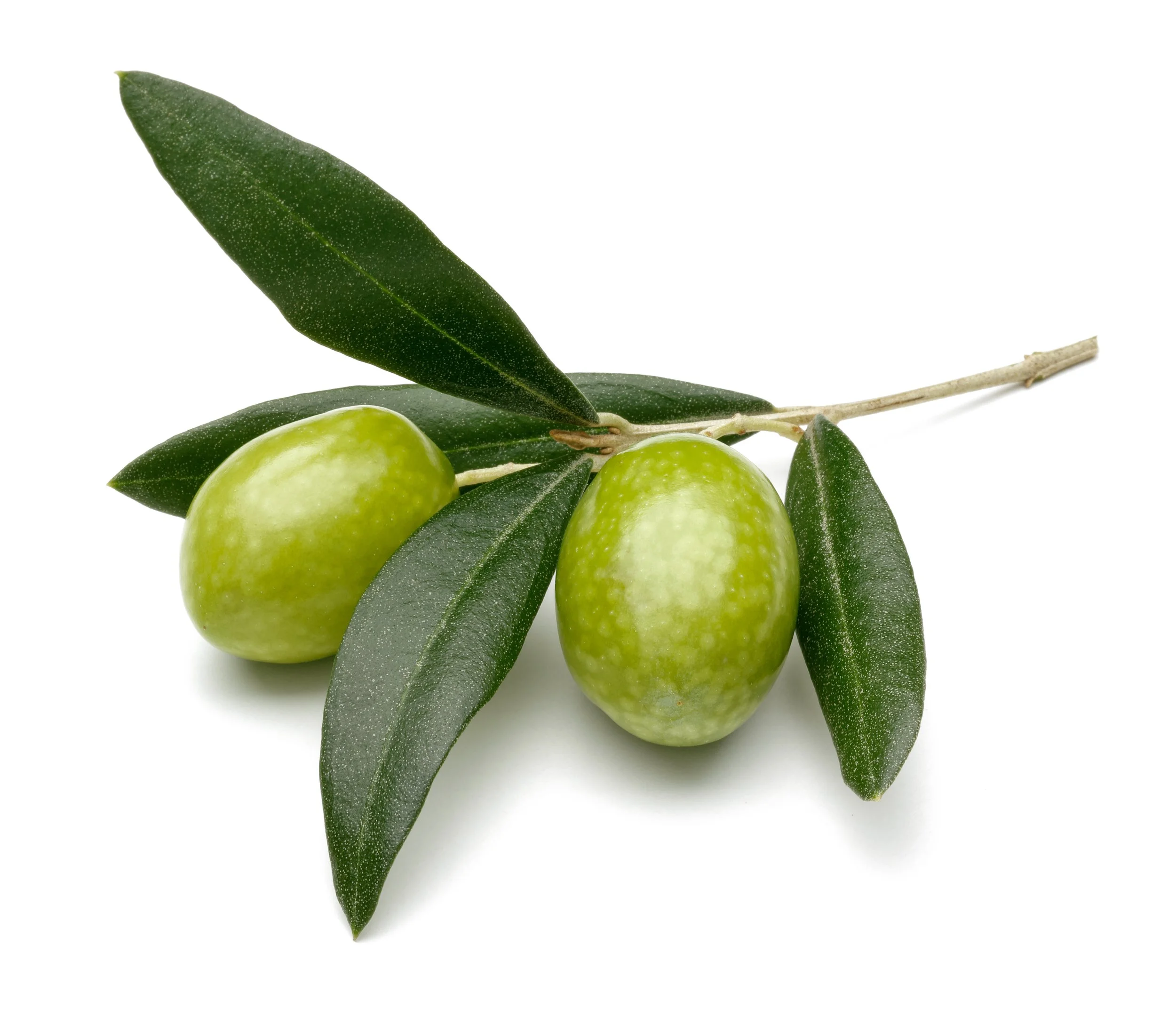
Olive
A brined green or black olive, the classic garnish for a Martini.
Origin
The Mediterranean, cultivated for over 6,000 years; the classic cocktail garnish role developed alongside the Martini's rise in the late 19th and early 20th centuries.
History
Olives have been cultivated across the Mediterranean since antiquity, primarily for oil, but their move into cocktails is a much more recent story tied directly to the Martini's evolution: as drier gin-and-vermouth Martinis became fashionable in the early 20th century, a briny olive (traditionally on a pick, sometimes multiple as a "dirty" Martini variant) became the classic savory garnish, an alternative to a lemon twist for drinkers wanting a saltier finish.
Flavor profile
Briny and savory, with a distinct salty tang that varies by variety (green olives are generally sharper, black olives milder).
Tasting notes
A skewered olive adds a salty, savory bite at the end of a sip, and its brine (used deliberately in a "dirty" Martini) shifts the whole drink toward a more savory, less purely herbal character.
Substitutes
- A lemon twist, for a completely different, brighter citrus garnish instead of a savory one.
- A cocktail onion, for a related but distinctly different savory garnish (as in a Gibson).
- A different olive variety, since brine intensity and flavor vary noticeably by type.