
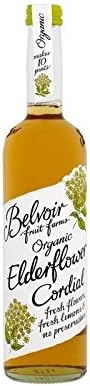
Elderflower Cordial
A non-alcoholic elderflower syrup with a delicate floral, honeyed flavor, used as a mixer alongside or instead of St-Germain.
Origin
Northern Europe, especially the United Kingdom, where elderflower has been foraged and used in home cooking and drink-making for centuries.
History
Elderflower cordial has deep roots in British and Northern European home foraging traditions, with elderflowers gathered each spring and steeped into a sweet, floral syrup long before it became a commercial product. Brands like Belvoir and various supermarket versions made it a mainstream pantry staple in the UK by the late 20th century, and its floral character became a popular non-alcoholic complement to gin in particular, tracing the same botanical family that gives many gins their own floral notes.
Flavor profile
Delicately floral and sweet, with a light honeyed, pear-like quality.
Tasting notes
A soft, springlike floral sweetness that pairs naturally with citrus and gin, adding aromatic complexity to a drink without any alcohol content or the greater intensity of St-Germain and other elderflower liqueurs.
Substitutes
- Elderflower liqueur (like St-Germain), understanding it adds both alcohol and more concentrated sweetness.
- A different floral cordial (like rose or violet), for a related but distinctly different floral note.
- Simple syrup with a few drops of orange blossom water, as a rough approximation.