
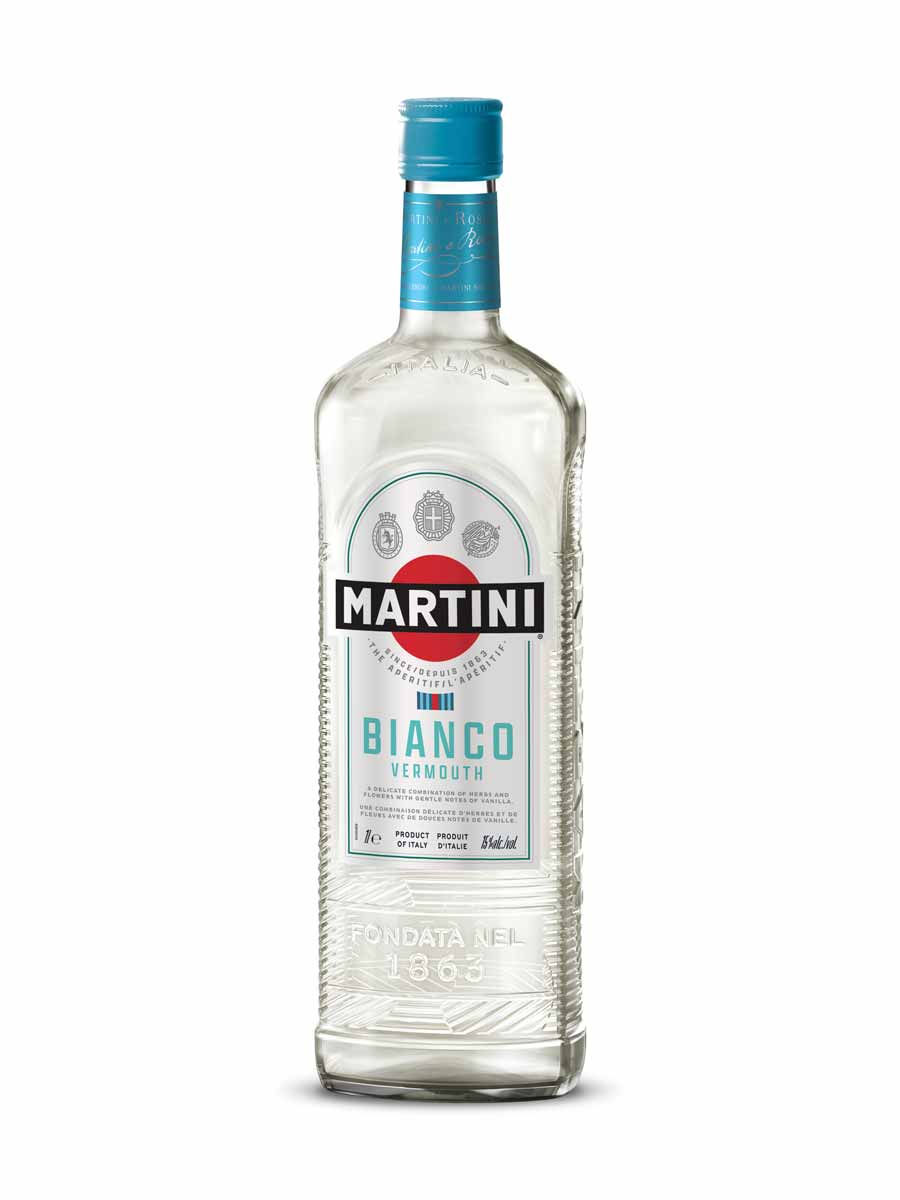
Bianco Vermouth
A pale, delicately sweet style of vermouth between dry and sweet, with a honeyed, floral character - used in cocktails like the Vesper.
Origin
Italy, with Martini & Rossi's 1910 Bianco widely credited as the style that popularized this middle category, following Dolin's earlier 1881 Blanc de Chambery in France.
History
Bianco (Italian) or blanc (French) vermouth developed as a middle style between dry and sweet vermouth: Dolin in Chambery is credited with the first sweetened white vermouth in 1881, but it was Martini & Rossi's 1910 Bianco that popularized the style more broadly, giving bartenders a pale, aromatic vermouth with real sweetness rather than dry vermouth's crispness or sweet vermouth's deep caramel color. It's become a popular modern substitution in classic gin cocktails when a softer, rounder profile than dry vermouth is wanted without sweet vermouth's heavier, darker character.
Flavor profile
Pale, floral, and moderately sweet, with citrus and light baking spice - richer than dry vermouth but lighter and less caramel-heavy than sweet (red) vermouth.
Tasting notes
Noticeable sweetness balanced by real acidity and a light underlying bitterness, with floral and citrus notes standing out more than in a red vermouth - Italian bianco styles often lean toward clove and vanilla, while French blanc styles lean more floral and piney.
Substitutes
- Dry vermouth with a splash of simple syrup, as a rough approximation when no bianco is on hand.
- A small amount of sweet vermouth blended with extra dry vermouth, to approximate bianco's middle-ground sweetness.
- A different producer's bianco or blanc vermouth, since the style varies noticeably by brand more than by country.