Xanthan Gum
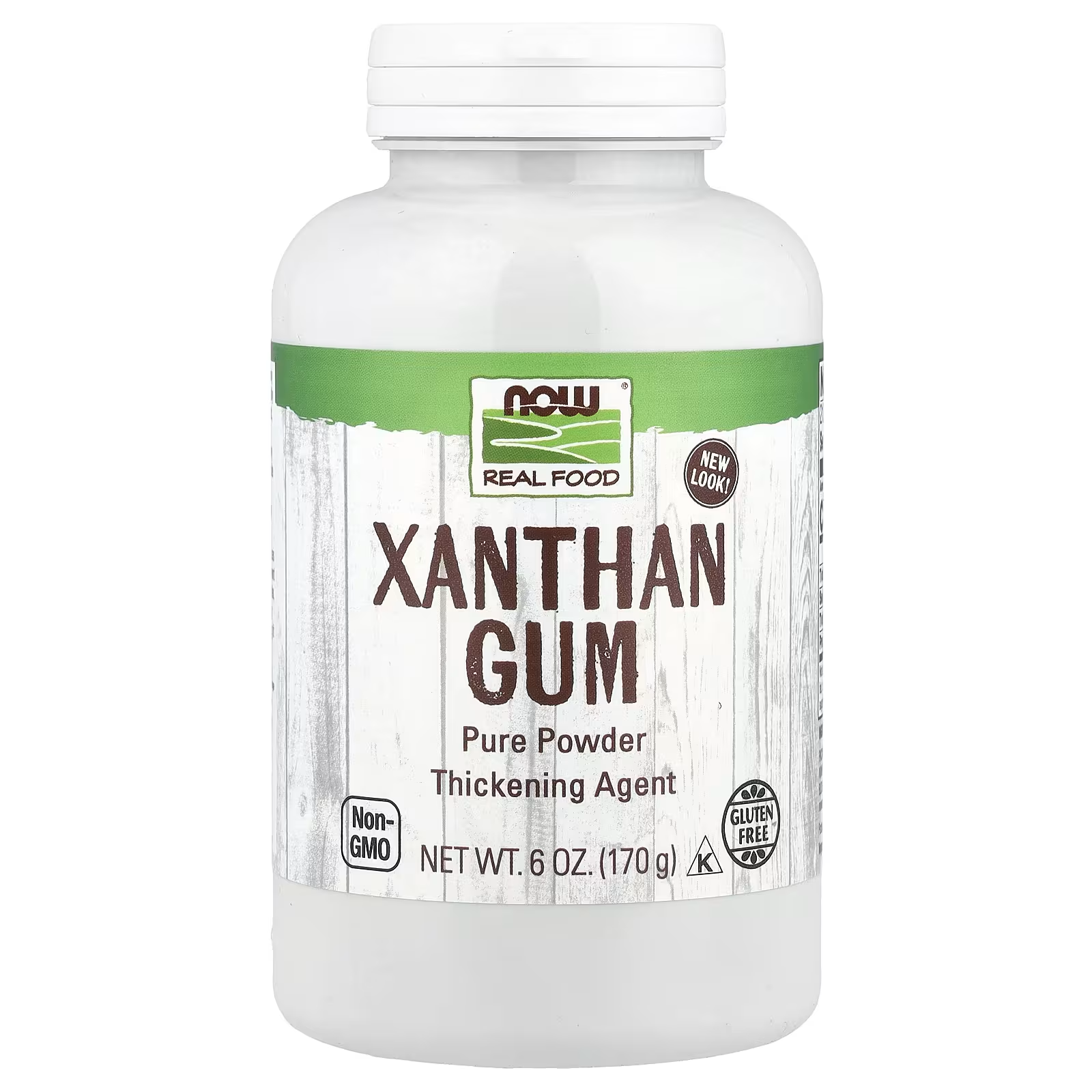
A food-grade thickening agent used in tiny amounts to give cocktails and syrups a smoother, more stable texture.
Origin
Developed in the 1960s by USDA researchers, a fermentation-derived polysaccharide later adopted by the food industry and, more recently, craft bartenders as a texturizing agent.
History
Xanthan gum was developed by USDA scientists in the 1960s as a fermentation byproduct of the bacterium Xanthomonas campestris, quickly finding wide use across the food industry as a thickener and stabilizer thanks to its ability to add viscosity in very small quantities. Craft bartenders adopted it much more recently, borrowing directly from modernist cuisine techniques to give syrups and cocktails a fuller, silkier mouthfeel without adding sweetness, useful for controlling texture independently of flavor.
Flavor profile
Flavorless, contributing texture rather than taste.
Tasting notes
Used in tiny quantities, xanthan gum thickens a liquid's texture and helps stabilize emulsions, giving a syrup or cocktail a fuller, more luxurious mouthfeel without changing its flavor at all.
Substitutes
- Gum arabic, for a related but different traditional bartending texturizer.
- A small amount of egg white, for a different method of adding body and texture.
- Simply omitting it, since most home recipes work fine without a dedicated texturizer.