
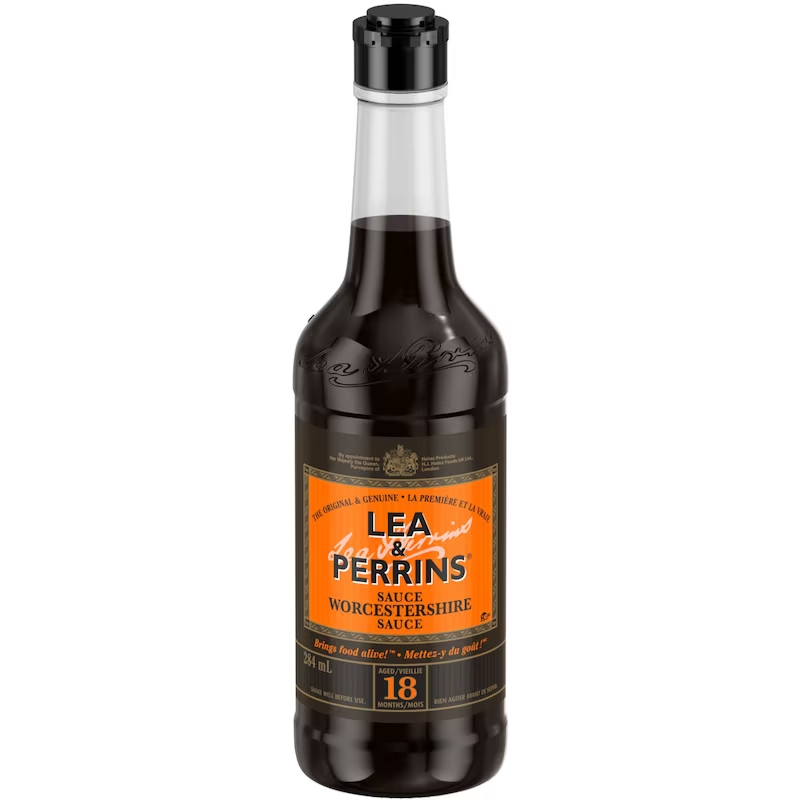
Worcestershire Sauce
A tangy, savory, fermented condiment, essential to a proper Bloody Mary.
Origin
Worcester, England, created in the 1830s by chemists John Wheeley Lea and William Henry Perrins, reportedly based on a recipe brought back from India.
History
Lea & Perrins developed Worcestershire sauce in the 1830s in Worcester, England, with popular legend holding that the recipe (a fermented blend of vinegar, anchovies, molasses, tamarind, and various spices) was based on one a local nobleman brought back from Bengal, India, though the exact history is debated. It became a defining condiment of British and later American cuisine, and its cocktail role is inseparable from the Bloody Mary, where a few dashes add deep savory, umami complexity alongside hot sauce and other spices.
Flavor profile
Intensely savory and tangy, with fermented anchovy-driven umami, sweetness from molasses, and a sharp vinegar bite.
Tasting notes
A few dashes bring complex savory depth to a drink, layering umami, tang, and a subtle sweetness all at once, essential to a properly balanced Bloody Mary and used the same careful, small-dose way as in cooking.
Substitutes
- Soy sauce, for a simpler umami substitute lacking Worcestershire's full complexity.
- Fish sauce, for a different but comparably savory, fermented substitute.
- A vegan Worcestershire-style sauce, for an anchovy-free alternative with a similar flavor profile.