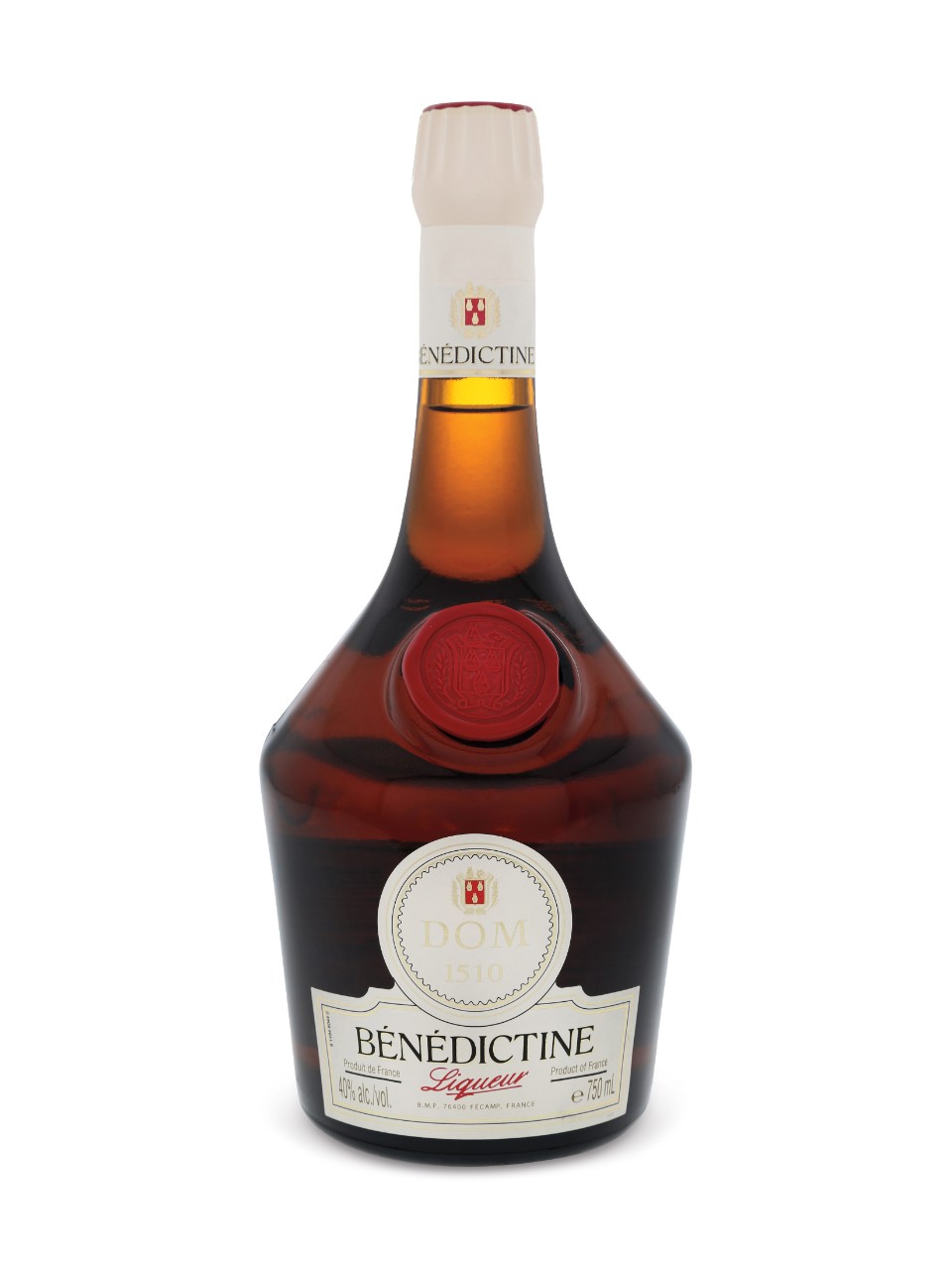
Benedictine
A French herbal liqueur made from a secret blend of 27 plants and spices, honey-sweet with a complex, warming finish. It's bottled in France at 40% alcohol, typically in a 750 mL bottle.
Origin
Fecamp, Normandy, France, first formulated in 1510 by Benedictine monk Dom Bernardo Vincelli at the Abbey of Fecamp.
History
According to the brand's own history, Benedictine's recipe was created in 1510 by Dom Bernardo Vincelli, a monk and botanist at the Abbey of Fecamp, and the elixir impressed French King Francois I enough that he traveled there to taste it in 1524. Production was interrupted by the French Revolution, and the original recipe was eventually passed down to the Le Grand family, who trademarked the modern Benedictine in 1864, adding the initials D.O.M. (Deo Optimo Maximo, "To God, most good, most great") to honor its monastic origin. It's made from a still-secret blend of 27 plants, roots, and spices, and became a fixture of early 20th-century American cocktail culture, most famously in the Vieux Carre and the Bobby Burns.
Flavor profile
Honeyed and richly herbal, with warm baking spice, citrus peel, and a faint hint of botanical bitterness.
Tasting notes
Sweet honey and warm spice (nutmeg, saffron) dominate, with citrus peel and herbal depth underneath - noticeably sweeter and rounder than a dry herbal liqueur like Chartreuse, which is why it's often used in small amounts to add complexity rather than as a main flavor driver.
Substitutes
- B&B (a pre-mixed blend of Benedictine and brandy), for a drier version of the same flavor profile.
- A small amount of honey syrup with a pinch of baking spice, as a rough non-herbal approximation.
- Yellow Chartreuse, for a different but comparably rich, monastic-style herbal liqueur, understanding the flavor will shift noticeably drier and more vegetal.