

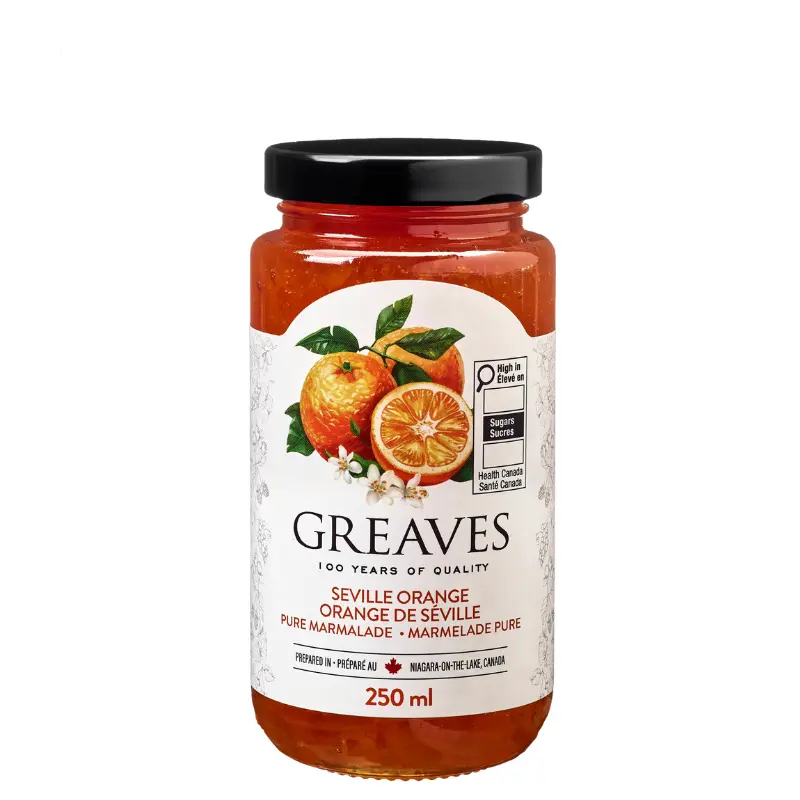
Orange Marmalade
A citrus preserve made from oranges and their peel, used to add bittersweet marmalade flavor to cocktails.
Origin
Scotland and England, with the modern chunky, bitter-orange style commercialized starting in 18th-century Dundee, though sweetened fruit preserves called "marmalade" (originally from quince) date back centuries earlier.
History
The word "marmalade" originally referred to a thick quince preserve imported to England from Portugal, but by the 18th century, Scottish producers (Dundee's Keiller family notably) had developed the bitter-orange version now considered classic, using Seville oranges' distinctive bitterness balanced against sugar. In cocktails, it's a relatively modern addition, muddled or stirred in to add both orange flavor and a thick, jammy texture to marmalade-based drinks like modern riffs on the whiskey sour.
Flavor profile
Sweet and bittersweet orange flavor with a thick, jammy texture and visible peel.
Tasting notes
A concentrated, slightly bitter orange sweetness with real texture from the shredded peel, adding both flavor and body to a drink in a way a smooth syrup or juice can't replicate.
Substitutes
- Orange curacao or triple sec, for a smoother, non-jammy orange flavor without the texture.
- Orange marmalade syrup (marmalade thinned and strained), as a smoother homemade version.
- A different citrus marmalade (grapefruit, lemon), for a related but distinctly different flavor.
Common cocktails