

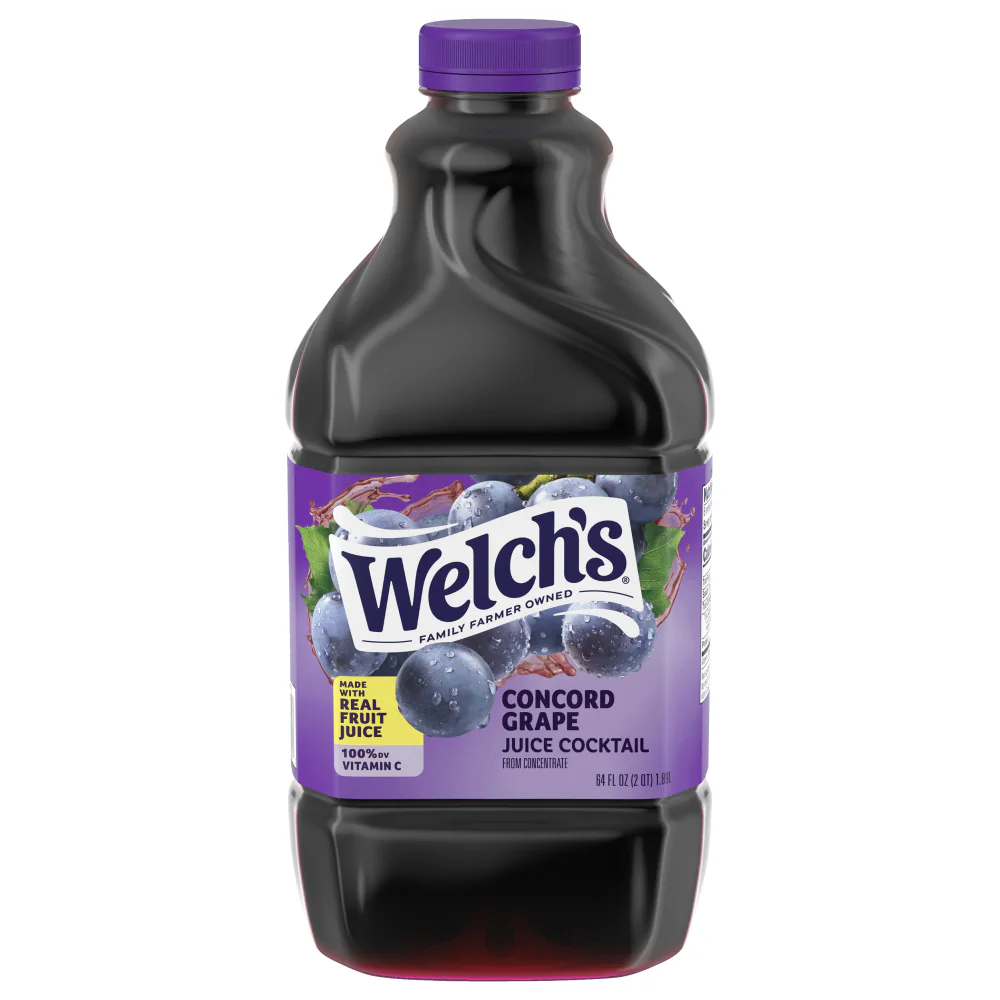
Grape Juice
Sweet juice pressed from grapes, occasionally used as a cocktail mixer.
Origin
Wherever grapes are grown commercially; pasteurized bottled grape juice became a mainstream product in the U.S. starting with Welch's in the late 19th century.
History
Thomas Welch, a dentist and prohibitionist, developed a method for pasteurizing grape juice in 1869 specifically to create a non-alcoholic alternative to communion wine, and the resulting product (later Welch's) grew into a major commercial brand through the 20th century. In cocktails, grape juice provides sweetness and body with a mild, distinctly grape-forward flavor, most commonly used in punches and as a modifier alongside wine-adjacent ingredients.
Flavor profile
Sweet and mildly tannic, tasting distinctly of whichever grape variety it's pressed from (Concord grape juice, the most common commercial style, is deep purple and quite sweet).
Tasting notes
A straightforward sweet-grape flavor with a light tannic edge, adding both sweetness and a deep purple color to punches and mixed drinks without the complexity or alcohol content of actual wine.
Substitutes
- White or red wine, understanding it adds real alcohol content and more complexity.
- Cranberry juice, for a different but comparably deep-colored, tart-sweet substitute.
- A different grape variety's juice, if the specific Concord-style flavor isn't essential.
Common cocktails