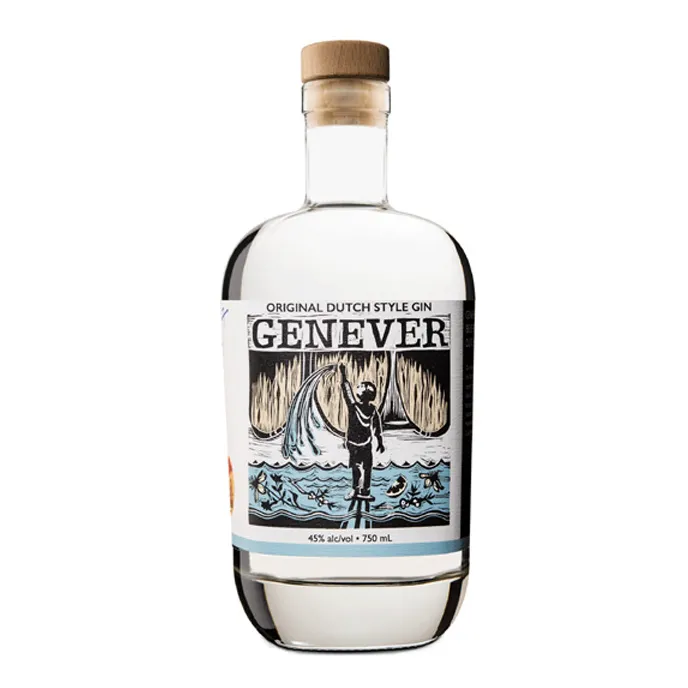
Genever
The juniper-forward Dutch predecessor to modern gin, made from a malted grain base that gives it a maltier, fuller-bodied flavor - essential to genever-era classics.
Origin
The Netherlands, Belgium, and neighboring regions, with documented recipes dating to at least the 16th century.
History
Genever's roots trace to at least the 13th century by some accounts, with a documented recipe appearing in a 1552 medical text by Antwerp physician Philippus Hermanni, who valued juniper for its supposed medicinal properties. Built on moutwijn (malt wine, a low-proof pot-distilled spirit from malted barley, corn, and rye) rather than the neutral grain spirit modern gin uses, genever is gin's direct ancestor: when Dutch and Flemish soldiers introduced it to English troops during the Thirty Years' War, the English carried a taste for it home and eventually developed their own drier, neutral-spirit-based version, which became gin. Genever comes in two main styles: oude ("old," with a higher malt-wine content and oak aging) and jonge ("young," lighter and more neutral, developed after 19th-century column-still technology made a cleaner spirit possible).
Flavor profile
Malty and grainy, closer to a light whiskey than to modern gin, with juniper present but less dominant than in London Dry styles.
Tasting notes
Oude genever tastes rich and malty, almost bready, with juniper as a background note rather than the star; jonge genever is lighter and cleaner, closer to a bridge between whiskey and gin, useful in classic pre-Prohibition cocktails that called for genever before gin took its place.
Substitutes
- A rich, malty gin (some contemporary distillers make genever-style gins), for the closest modern approximation.
- A blend of light whiskey and a small amount of gin, as a rough homemade substitute.
- Standard gin, in most modern recipes, understanding the malty character will be missing.