

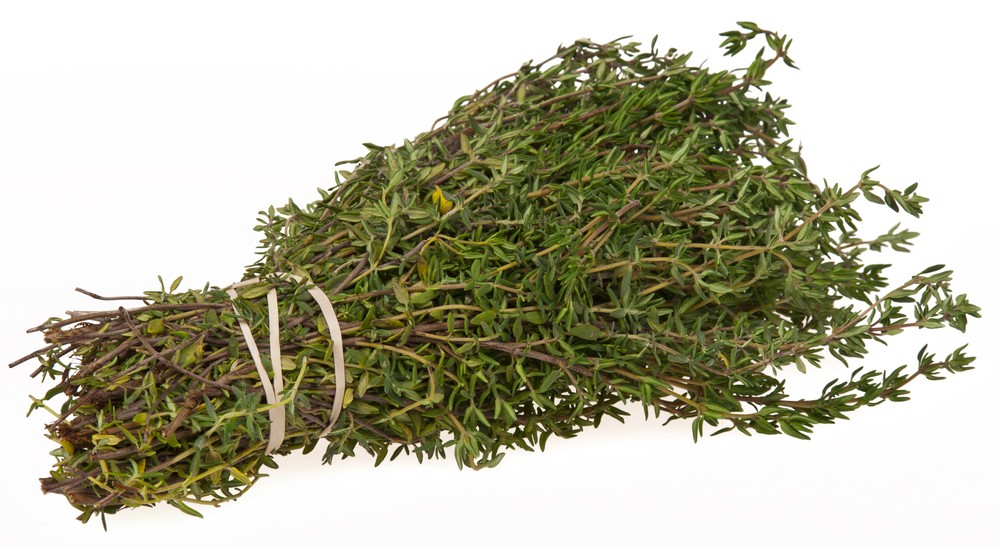
Thyme
A subtle, earthy herb used fresh as a garnish or infused into syrup.
Origin
The Mediterranean, cultivated for culinary and medicinal use since antiquity, later spreading worldwide as a common kitchen herb.
History
Thyme has been cultivated across the Mediterranean since ancient Greek and Roman times, valued both as a culinary herb and for its purported medicinal properties, and it spread throughout Europe and eventually the world as a kitchen garden staple. Its cocktail use is part of the broader modern trend of borrowing fresh culinary herbs for garnish and infusion, adding an earthy, slightly minty aromatic note to gin and other botanical-forward cocktails, often as a sprig garnish or muddled component.
Flavor profile
Earthy and slightly minty, with a subtle peppery, woodsy aroma.
Tasting notes
A fresh thyme sprig releases a savory, herbal aroma when muddled or expressed over a drink, adding complexity to gin cocktails and other botanical-forward drinks without overwhelming sweetness or citrus.
Substitutes
- Rosemary, for a related but more pungent, piney herbal substitute.
- Sage, for a different but comparably earthy, savory herb substitute.
- Dried thyme, in a pinch, though fresh is preferred for both aroma and presentation.
Common cocktails