
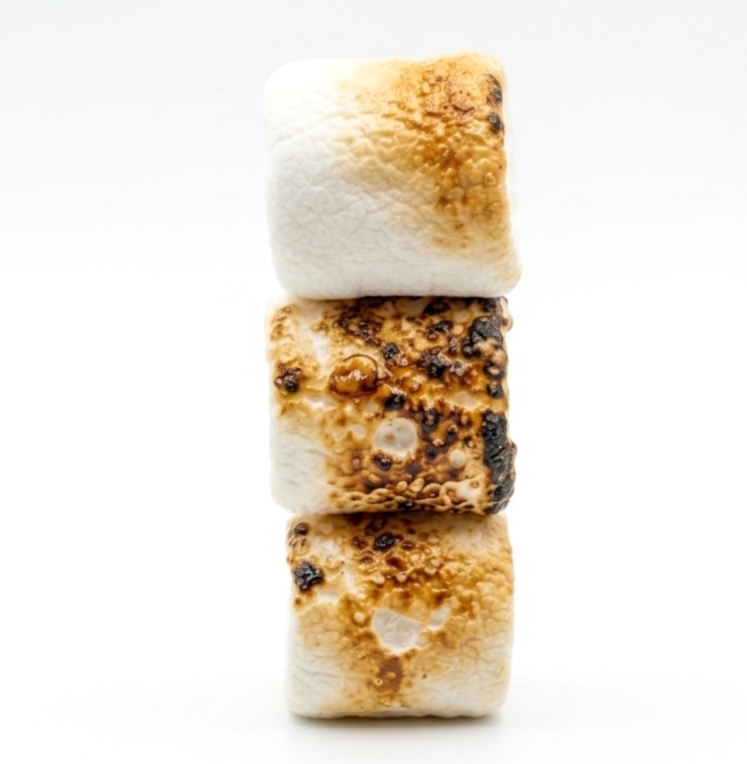
Marshmallows
Soft, sweet confections, sometimes used as a garnish for dessert-style drinks.
Origin
Ancient Egypt originally (a medicinal confection made from the marsh mallow plant's root sap), transformed into the modern gelatin-and-sugar confection in 19th-century France.
History
The earliest marshmallows were a medicinal Egyptian confection made from the sap of the marsh mallow plant, mixed with honey, quite different from the mass-produced sugar-and-gelatin treat known today. French confectioners in the 19th century developed a process using whipped egg whites and sugar (eventually replacing the actual marsh mallow root with gelatin for easier mass production), and by the 20th century marshmallows became a distinctly American treat, especially tied to campfire s'mores and hot chocolate. In cocktails, they show up mostly as a garnish or a flavoring for dessert-style hot drinks, playing on that nostalgic, campfire association.
Flavor profile
Purely sweet and mild, with a soft, pillowy texture and almost no flavor beyond sugar and a faint vanilla note.
Tasting notes
Contributes sweetness and texture (melted into a hot drink, or toasted and floated as a garnish) rather than any distinct flavor, mostly valued in cocktails for its playful, nostalgic association with campfires and hot chocolate.
Substitutes
- Marshmallow-flavored syrup, for the flavor in an easily mixable liquid form.
- Simple syrup with a drop of vanilla extract, as a rough approximation of its mild sweetness.
- Whipped cream, for a different but comparably indulgent, dessert-style garnish.