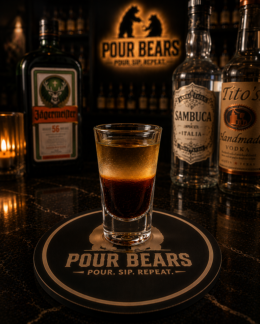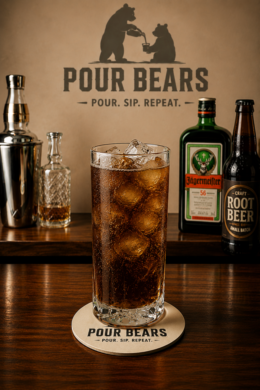
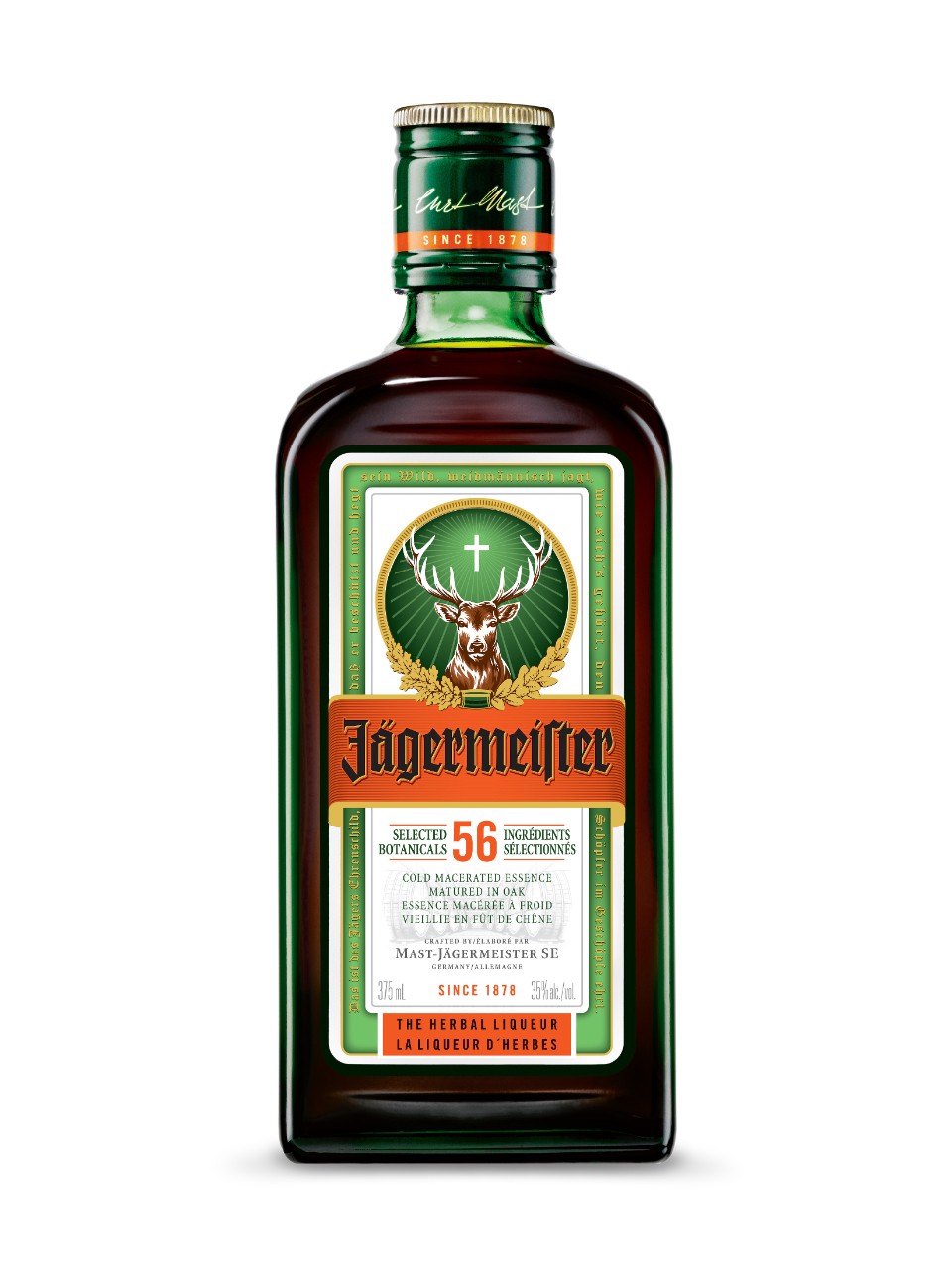
Jägermeister
A German herbal liqueur made from 56 herbs, roots, and spices, with a bittersweet, slightly medicinal flavor. It's bottled in Germany at 35% alcohol, most commonly in a 375 mL bottle.
Origin
Wolfenbüttel, Germany, created in 1934 by Curt Mast, heir to the family vinegar and wine business.
History
Curt Mast developed Jagermeister's recipe in 1934 at his family's spirits business in Wolfenbuttel, Lower Saxony, blending 56 herbs, fruits, roots, and spices, steeped in alcohol and water and aged a year in oak, a formula that's remained unchanged since. He named it Jagermeister, German for "master hunter," reflecting his own passion for hunting, and even personally tested various bottle shapes by dropping them onto an oak floor to find an unbreakable design, settling on the distinctive squared, rounded-edge bottle still used today. It became a fixture of American shot and shooter culture from the 1970s onward, especially as the base of the Jager Bomb (Jagermeister dropped into an energy drink).
Flavor profile
Complex and bittersweet, with licorice, citrus, and warm baking spice over a strong herbal bitterness.
Tasting notes
A dense, layered mix of anise, orange peel, ginger, and other spices with real herbal bitterness underneath, served ice-cold as a shot to soften its intensity - complex enough that sipping it slowly reveals far more than the shot-culture reputation suggests.
Substitutes
- Fernet Branca, for a different but comparably intense, herbal bitter digestif.
- A different German herbal liqueur (Underberg, Kuemmerling), for a related but distinctly different bitter profile.
- Amaro Montenegro, for a much milder, sweeter substitute if Jagermeister's intensity isn't wanted.