

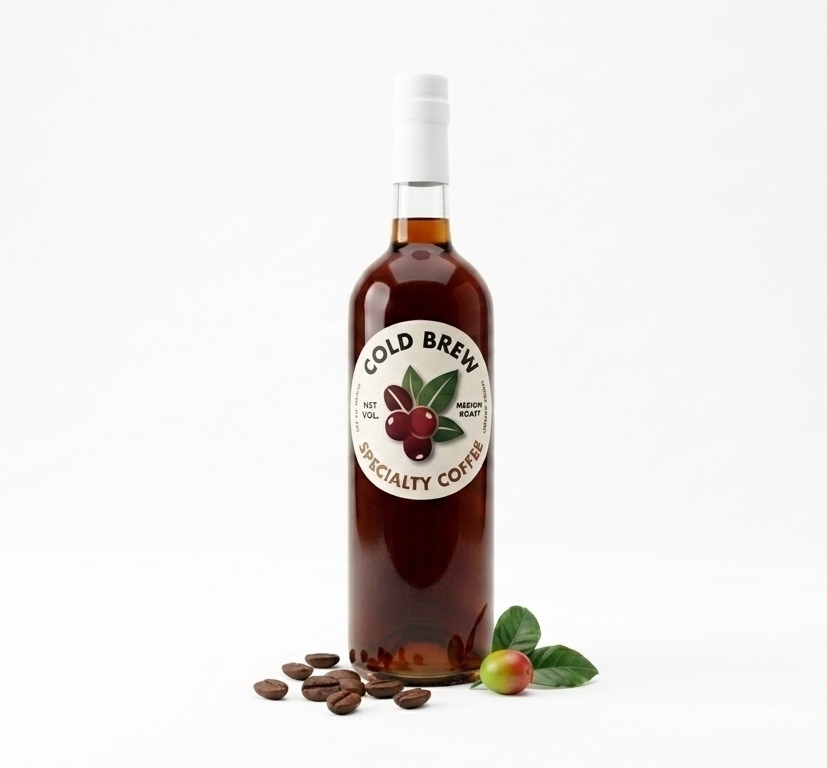
Cold Brew Coffee
Coffee steeped in cold water over an extended time, giving a smoother, less acidic flavor than hot-brewed coffee - used in iced coffee cocktails.
Origin
A coffee-brewing method (steeping grounds in cold water over many hours) with roots in centuries-old brewing traditions, popularized commercially in the U.S. and Japan in the 20th and 21st centuries.
History
Cold brewing coffee, rather than brewing hot, has older regional roots (some trace a version to 17th-century Kyoto-style slow drip coffee in Japan), but it became a mainstream commercial product mostly from the 2010s onward as part of a broader specialty coffee boom. Its smoother, less acidic profile compared to hot-brewed coffee made it a natural fit for cold cocktails, where hot coffee's sharper acidity can clash more than cold brew's mellower character does.
Flavor profile
Smooth and mellow, with less acidity and bitterness than hot-brewed coffee, and a naturally sweeter perceived flavor.
Tasting notes
Rounder and less sharp than hot coffee, with chocolate and nutty notes standing out more than acidity, which is exactly why it blends more smoothly into shaken cold cocktails like an Espresso Martini variation.
Substitutes
- Chilled regular brewed coffee, for a similar role with slightly more acidity and bitterness.
- Coffee liqueur diluted with water, as a sweeter, lower-effort substitute.
- Espresso, chilled, for a more concentrated coffee character in a smaller volume.
Common cocktails