
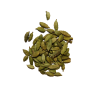
Cardamom
An intensely aromatic spice with citrusy, herbal notes, used in some spiced cocktails.
Origin
The Western Ghats of India, one of the oldest and most expensive spices in the world, later spread through the Middle East and Scandinavia via trade.
History
Cardamom has been cultivated and traded out of India for thousands of years, prized enough in the ancient world to be counted among the most valuable spices alongside pepper and saffron. Arab traders carried it through the Middle East, where it remains central to coffee culture, and it also became deeply embedded in Scandinavian baking through historic Viking-era trade routes. In cocktails, cardamom (whole pods, crushed seeds, or infused into syrups and bitters) adds a warm, aromatic spice note popular in fall and winter drinks and in bitters blends.
Flavor profile
Warm, floral, and slightly citrusy, with a cooling, eucalyptus-like note underneath its sweetness.
Tasting notes
A complex mix of floral sweetness, citrus, and a cooling menthol-like edge, more delicate and aromatic than heavier spices like clove or cinnamon, making it a common addition to spiced syrups, bitters, and mulled drinks.
Substitutes
- A pinch of ground cinnamon and a drop of citrus zest, as a rough approximation of cardamom's warmth and brightness.
- Cardamom bitters, for a liquid, pre-dosed version of the same flavor.
- Star anise, for a different but comparably aromatic, warming spice note.