
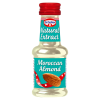
Almond Flavoring
A concentrated almond extract, used in small amounts for a marzipan-like note.
Origin
Bitter almonds (or, in imitation versions, synthetic benzaldehyde), extracted into an alcohol base as a shelf-stable flavoring for baking.
History
True almond extract is made by steeping bitter almonds (or almond oil) in alcohol, a preservation method common to most extracts once alcohol became cheaply available for household cooking use. Because bitter almonds naturally contain small amounts of a cyanide-related compound, commercial almond extract is carefully processed to remove it, and many bottles sold today are actually "imitation" flavoring made from synthetic benzaldehyde, which tastes almost identical to the real thing at a fraction of the cost. In bartending, it's a shortcut for a marzipan-like note when a real almond liqueur like amaretto or orgeat syrup would otherwise be needed but isn't on hand.
Flavor profile
Concentrated marzipan and cherry-pit sweetness, far more intense than the almond itself, meant to be used just a drop or two at a time.
Tasting notes
A tiny amount reads as sweet marzipan and a faint cherry-stone note; too much quickly turns soapy and artificial-tasting, which is why it's dosed by the drop rather than the dash.
Substitutes
- Orgeat syrup, for a sweeter, more traditional almond note that also adds body to a Mai Tai or tiki drink.
- A small splash of amaretto, for almond flavor with some alcohol content added along with it.
- Vanilla extract, in a genuine pinch, for a different but complementary sweet warmth.